


PRIVATE CELLULAR
4G LTE/5GSecure, Scalable Wireless Connectivity Built for Critical Operations
Industrial and critical infrastructure environments are rapidly transforming with the addition of more applications and devices—from connected sensors and robotics to real-time video analytics and autonomous systems. But without reliable, scalable connectivity, these technologies cannot deliver their full value.
Private cellular networks (4G/LTE and 5G) provide the secure, high-performance wireless foundation needed to support modern operations and close the growing AI Connectivity Gap. Across industries, AI-enabled devices and distributed compute are advancing rapidly. But many operational networks were not designed to connect them at scale. Closing the AI connectivity gap is becoming critical to unlocking performance, safety, and efficiency.
WHAT IS PRIVATE CELLULAR?
A private cellular network is a dedicated 4G LTE or 5G wireless network built specifically for enterprise or industrial use. The private cellular network is for the sole use of the owner organization, and completely separate from public carrier networks. It delivers secure, wide-area wireless connectivity across complex environments where traditional networks like Wi-Fi or public cellular fall short.
Private cellular networks are purpose-built for industrial wireless connectivity, enabling consistent performance across refineries, manufacturing plants, ports, utilities, and remote field operations.

Dedicated network
infrastructure, separate
from the Public network

Control over
device connectivity,
performance, and security

Reliable coverage
across large, complex
environments

Seamless mobility
for connected assets
and workers

Integration with
existing IT and OT
systems
INDUSTRY ADOPTION
MANUFACTURING
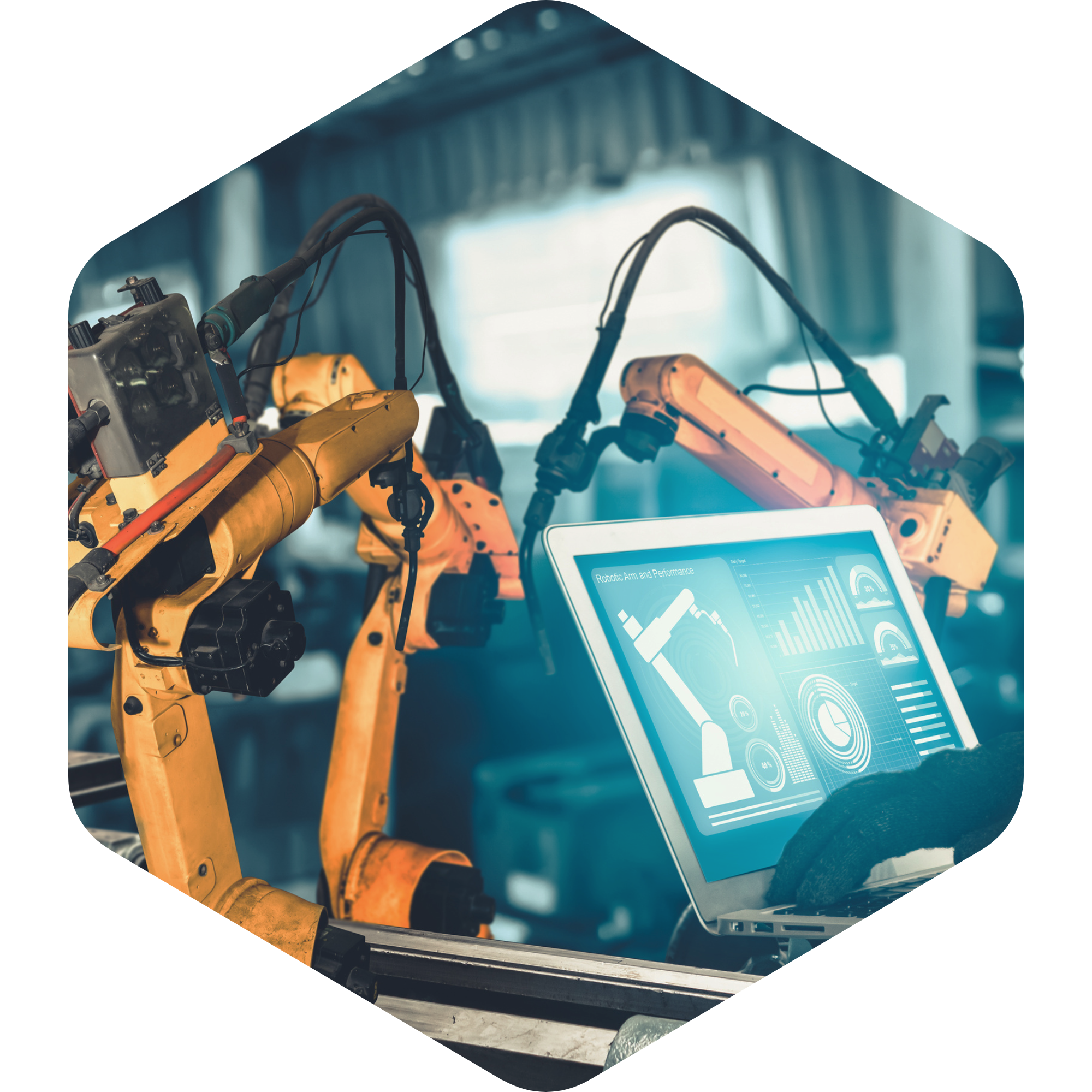
High device density and automation demand low-latency, deterministic connectivity.
Top Use Cases:
- Industrial IoT (IIoT) and machine connectivity
- Autonomous mobile robots (AMRs) and AGVs
- AI-driven quality inspection using computer vision

OIL & GAS
Remote environments, hazardous conditions, and distributed assets require reliable, wide-area connectivity.
Top Use Cases:
- Connected worker safety and monitoring systems
- Autonomous drilling and inspection operations
- Drone-based pipeline and facility inspections

TRANSPORTATION
High device density and automation demand low-latency, deterministic connectivity.
Top Use Cases:
- Industrial IoT (IIoT) and machine connectivity
- Autonomous mobile robots (AMRs) and AGVs
- AI-driven quality inspection using computer vision

UTILITIES
Distributed infrastructure with strict uptime and reliability requirements.
Top Use Cases:
- Grid monitoring and fault detection
- Substation automation and control systems
- Predictive maintenance for remote assets
PRIVATE 4G v. PRIVATE 5G
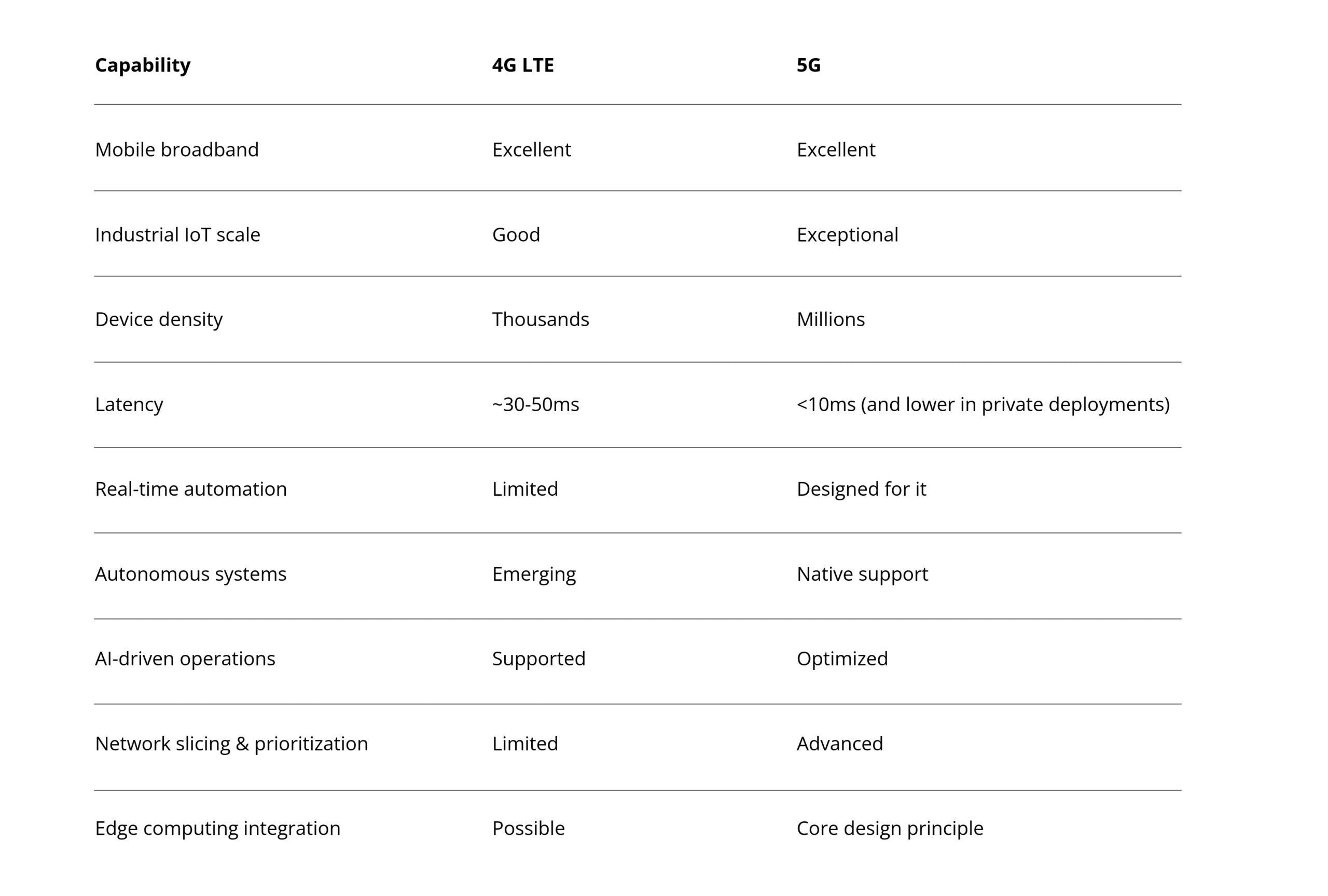
Both 4G LTE and 5G are foundational technologies for private cellular networks. In fact, many industrial organizations successfully deploy private LTE (4G) today because it delivers reliable coverage, mobility, and security.
However, while 4G solved the challenge of connecting people, 5G is designed to connect machines, systems, and autonomous operations at scale.
The difference is not simply more speed—it's a fundamentally different capability model.
Advantages of Private Cellular
For Enterprise and Industrial Networks
Predictable Performance in
Industrial Environments
Engineered for interference, terrain, and operational complexity--not office environments.
Enterprise Control
and Security
Full control over network access, performance, and policies--reducing reliance on public carriers.
Scalable Connectivity
for AI and Automation
Support growth in IoT Devices, Robotics, Video Analytics, and Autonomous Systems
Seamless Mobility
Across Operations
Maintains connectivity for vehicles, equipment, and personnel in motion.
Integration with Existing
Infrastructure
Works alongside fiber, Wi-Fi, and legacy systems--supporting hybrid network architectures.
Improved Safety, Visibility,
and Reliability
Enables real-time monitoring, faster response times, and enhanced situational awareness.
Why Future Technologies?
Modernizing connectivity is not about replacing everything or choosing one network. It is about designing the right architecture, validating it before deployment, and implementing it in a way that protects live operations.
Future Technologies is a trusted lead systems integrator for critical connectivity. We help organizations align private cellular, Wi-Fi, fiber, industrial Ethernet, Wireless WAN, edge devices, and OT systems into a production-ready connectivity architecture.
Organizations choose Future Technologies for:
- Advisory-led, vendor-neutral strategy
- Multi-network architecture across plant, warehouse, yard, and OT environments
- Industrial and mission-critical deployment experience
- Living Lab validation to reduce pilot-to-production risk
- Low-disruption implementation for live plant environments
- Lifecycle support after deployment
We don’t just design networks—we stand behind them in the field.
Critical Connectivity. Built Right.