


June 5, 2026
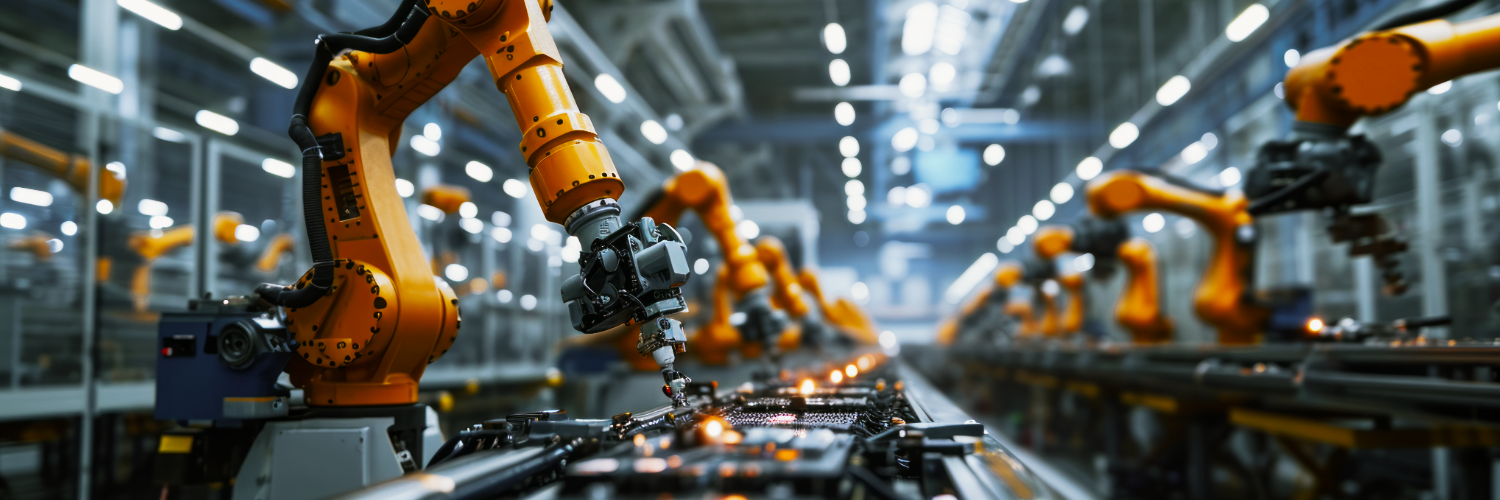
Manufacturers are investing heavily in automation, robotics, connected workers, machine vision, sensors, and AI-enabled production systems. These technologies promise higher throughput, better quality, safer operations, and more resilient production.
But many smart factory projects run into the same hidden constraint: the network was never designed for the level of mobility now being placed on it. For years, plant networks were built around relatively fixed assets. Machines were wired. Workers used localized devices. Wireless access was often designed around people, not autonomous systems moving continuously through production areas, warehouses, staging zones, and yards.
That operating model is changing quickly.
AGVs, AMRs, connected forklifts, scanners, tablets, wearable devices, cameras, and edge systems all need reliable connectivity while moving through dynamic environments. These systems do not simply need “coverage.” They need predictable performance, seamless mobility, low latency, secure segmentation, and the ability to stay connected as operational workflows change.
That is where many legacy networks begin to show strain. A Wi-Fi refresh may help in some areas. More fiber may support parts of the backbone. But neither automatically solves the broader challenge of operational mobility. Modern manufacturing environments increasingly require a multi-layer connectivity architecture that brings together Wi-Fi, private cellular, industrial networking, Wireless WAN, edge devices, site infrastructure, and operational visibility tools based on the workflow being supported.
The question is not, “Should we use Wi-Fi or private cellular?”
The better question is, “What operational outcome are we trying to enable, and what connectivity architecture is required to support it?”
For mobile robotics and AGVs, private cellular may provide the deterministic mobility and handoff performance needed across large or complex environments. For scanners, tablets, and localized devices, Wi-Fi may still be the right layer. For yards, temporary areas, or distributed facilities, Cellular Wireless WAN may play an important role. For machine vision and edge analytics, the architecture may need to account for local processing, high-bandwidth uplink, and resilient transport.
Future Technologies In the Field
Future Technologies designed, deployed, and continues to support a private cellular network inside an advanced automotive manufacturing facility where AGVs rely on seamless mobility across the factory floor. The project demonstrates why manufacturing connectivity must be engineered around operational workflows, mobility patterns, and uptime requirements, not simply signal coverage.
This is the core issue behind many stalled smart factory initiatives. The business invests in automation, but the connectivity foundation was designed for a different era.
When connectivity is designed correctly, manufacturers can support:
|
Outcome |
What It Enables |
|
Scalable robotics and automation |
AGVs, AMRs, and mobile equipment can operate more reliably across production and warehouse environments. |
|
Higher throughput |
Materials, workers, and systems can move with fewer delays caused by connectivity interruptions. |
|
Improved operational visibility |
Sensors, cameras, devices, and edge systems can provide better real-time insight into production conditions. |
|
Safer connected workers |
Teams can rely on mobile communications, alerts, and digital workflows across more areas of the facility. |
|
Stronger resilience |
Critical workflows are less dependent on a single network layer or fragile infrastructure design. |
The future smart factory will not run on one network. It will run on an operational connectivity architecture designed around the use cases, mobility patterns, data flows, and uptime requirements of the business.
That is what Future Technologies means by connectivity transformation.
Ready to explore what this could look like in your environment?
Start with a Living Lab Virtual Tour, request a conceptual design and budget for private cellular or neutral host, or explore starter solutions for private 5G and Cellular Wireless WAN.
For qualified manufacturing leaders, Future Technologies is hosting a live Living Lab event in Milwaukee this July with limited seating available. This is a unique opportunity for in-depth conversation with Future Technologies CTO Gary Hill, former CTO of Georgia-Pacific, and to see how modern connectivity architectures can support automation, mobility, edge intelligence, and operational resilience.
Critical Connectivity. Built Right.
Join us on July 20th in Milwaukee for a Connectivity Workshop + Brewers Game
Reserve Your Spot
Ready to take the next step in your connectivity transformation journey?
Contact Us