
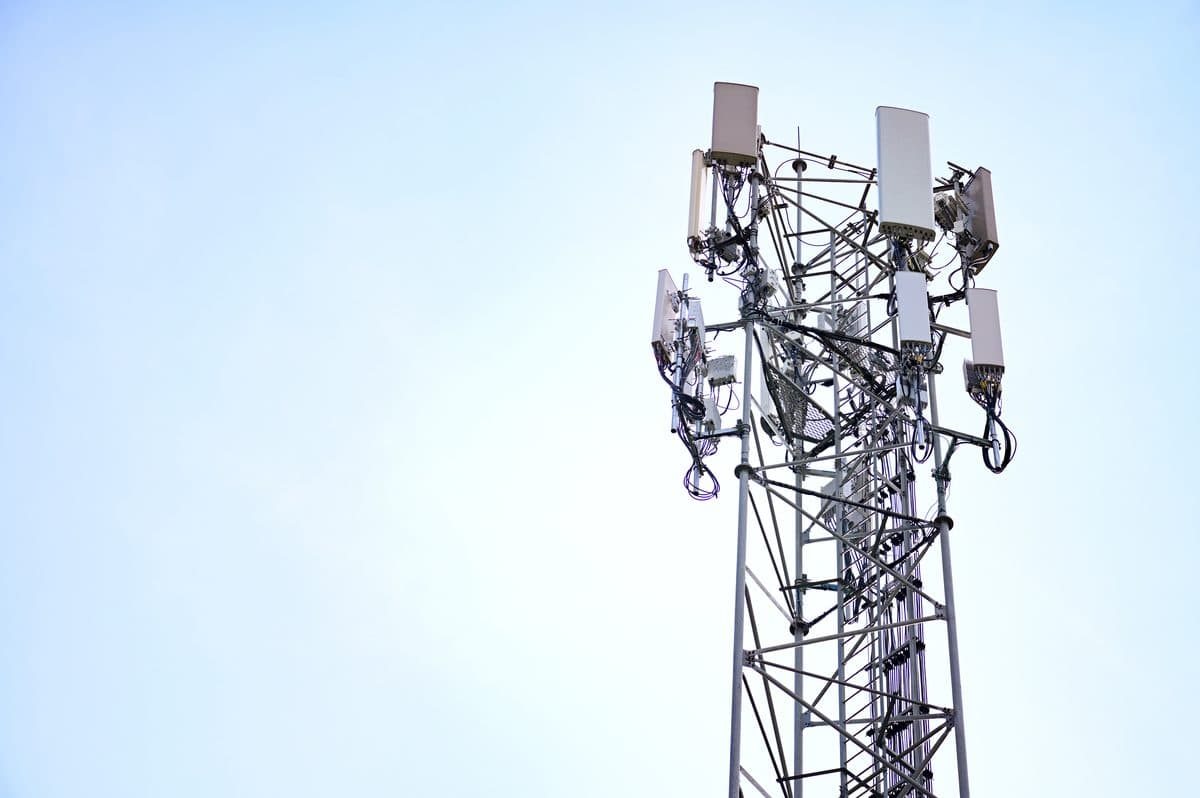
Private Cellular Networks
Secure, reliable wireless connectivity for mission-critical operations.
Private LTE and 5G networks provide dedicated cellular connectivity for industrial and utility environments requiring reliable coverage, mobility, security, and greater control over network operations.
Future Technologies is a connectivity systems integrator that helps organizations assess, design, deploy, integrate, and support private cellular networks, including CBRS-based solutions. We engineer networks around operational requirements, connecting workers, vehicles, equipment, sensors, and automation systems while integrating with existing Wi-Fi, wired, and public cellular infrastructure.
What Private Cellular Networks deliver
Private LTE, 5G & CBRS
Dedicated cellular networks designed to meet enterprise and industrial requirements for coverage, capacity, security, and operational control.
Industrial Coverage & Mobility
Engineered wireless coverage for facilities, campuses, yards, and distributed operational environments supporting mobile workers, vehicles, equipment, and connected assets.
Network Security & Control
Greater control over network access, device connectivity, traffic policies, and operational data, based on the selected private cellular architecture and operating model.
Industrial IoT & Automation
Connectivity for industrial sensors, equipment, AGVs, AMRs, cameras, and automation systems requiring reliable communications across operational environments.
Integration with Existing Networks
Private cellular designed to complement Wi-Fi, wired networks, and public cellular services, with each technology supporting the applications and environments where it fits best.
Network Lifecycle & Optimization
Engineering, deployment, testing, performance optimization, and ongoing support to help private cellular networks evolve with operational requirements.
What it enables
- Reliable wireless coverage and mobility across demanding operational environments.
- Greater control over network access, security, and connected devices.
- Connectivity for industrial automation, remote monitoring, and operational visibility.
- Improved network resilience through integrated, multi-network architectures.
- A scalable foundation for expanding connected operations and emerging applications.
Why Future Technologies for Private Cellular Networks
Private cellular is more than a wireless network deployment. Successful implementations require the right architecture, coverage design, device integration, security, and operational support.
Future Technologies combines engineering expertise, field deployment capabilities, and lifecycle services to deliver private LTE and 5G networks for mission-critical environments. Through the Future Technologies Living Lab, customers can evaluate technologies, test connected devices, and validate integration approaches before deploying at scale.
Our technology-neutral approach helps customers determine where private cellular provides the greatest value, and where other connectivity technologies may be better suited to their requirements.
Industries that rely on it

Manufacturing
Private LTE and 5G networks provide reliable wireless connectivity for industrial automation, AGVs, AMRs, connected equipment, and mobile workers. Engineered for demanding production environments, private cellular supports mobility, operational visibility, and integration with existing industrial networks.

Oil & Gas
Private cellular networks support secure, reliable communications across production facilities, refineries, terminals, and other industrial energy environments. Private LTE and 5G enable connectivity for field workers, mobile equipment, industrial IoT devices, remote monitoring, and operational systems where coverage, resilience, and network control are critical.

Maritime Ports & Terminals
Private LTE and 5G networks provide wide-area wireless coverage and mobility across complex port and terminal environments. They support connected cranes, yard vehicles, mobile equipment, sensors, and terminal operations that depend on reliable communications across expansive, constantly changing facilities.

Warehouse & Distribution
Private cellular networks extend reliable wireless connectivity across distribution centers, loading docks, outdoor yards, and logistics operations. Private LTE and 5G support AMRs, AGVs, scanners, connected vehicles, and other mobile assets while complementing existing Wi-Fi networks to improve operational continuity.

Electric Utilities
Private LTE and 5G networks help electric utilities establish secure, resilient communications across substations, grid-edge infrastructure, field operations, and distributed assets. They support telemetry, remote monitoring, workforce mobility, and grid modernization initiatives while providing greater control over critical operational communications.
Common Questions About Private Cellular Networks
What is a private cellular network?+
A private cellular network is a dedicated LTE or 5G network designed to provide wireless connectivity within a defined operational environment. Unlike traditional public cellular services, private networks can offer organizations greater control over coverage, network access, security, and performance. They are commonly deployed in manufacturing facilities, utilities, oil and gas operations, ports, and other mission-critical environments.
What is the difference between private LTE and private 5G?+
Both private LTE and private 5G provide dedicated cellular connectivity for industrial operations. Private LTE is a mature technology well suited to many applications involving mobility, telemetry, and connected equipment. Private 5G offers additional capabilities for applications requiring higher capacity, lower latency, or greater device density, depending on the network architecture. The right choice depends on operational requirements, device compatibility, spectrum availability, and long-term objectives.
When should an industrial organization consider private cellular instead of Wi-Fi?+
Private cellular may be appropriate when operations require wide-area coverage, mobility across large facilities or outdoor environments, or greater control over wireless network performance and access. Wi-Fi remains an effective solution for many industrial applications, particularly within buildings and defined coverage areas. Future Technologies evaluates both technologies to determine where each fits best, including environments where they work together.
What is CBRS, and how is it used in private cellular networks?+
Citizens Broadband Radio Service (CBRS) is a shared spectrum framework in the United States operating in the 3.5 GHz band. It enables organizations to deploy private LTE and 5G networks using spectrum access coordinated through an automated management system. CBRS can provide a practical spectrum option for industrial facilities, warehouses, ports, and other operational environments, subject to coverage, equipment, and spectrum availability requirements.
Can private cellular integrate with existing Wi-Fi and wired networks?+
Yes. Private LTE and 5G networks can be integrated with existing Wi-Fi, Ethernet, fiber, and enterprise or operational technology networks. Each technology can serve different connectivity requirements within the same environment. Successful integration requires coordinated network architecture, security policies, device compatibility, routing, and operational management.
What is involved in designing and deploying a private cellular network?+
Private cellular deployment typically begins with an assessment of operational requirements, existing infrastructure, coverage needs, connected devices, and security considerations. Implementation may include RF planning, spectrum evaluation, network architecture, site infrastructure, equipment installation, systems integration, testing, and commissioning. Future Technologies provides engineering-led advisory, project delivery, and lifecycle services to help organizations move from evaluation to operational deployment.
Can private cellular networks support electric utility operations?+
Yes. Private LTE and 5G networks can support utility communications for substations, grid-edge devices, field personnel, remote monitoring, and distributed infrastructure. They can provide utilities with greater control over selected communications environments while integrating with existing fiber, microwave, public cellular, and other networks. The appropriate architecture depends on coverage, resilience, application requirements, spectrum availability, and the utility's operational priorities.
Put Private Cellular Networks to work in your operation.
Every network has its purpose. Start with a Living Lab tour or a conceptual design and we will map your priorities to the right combination of layers.