
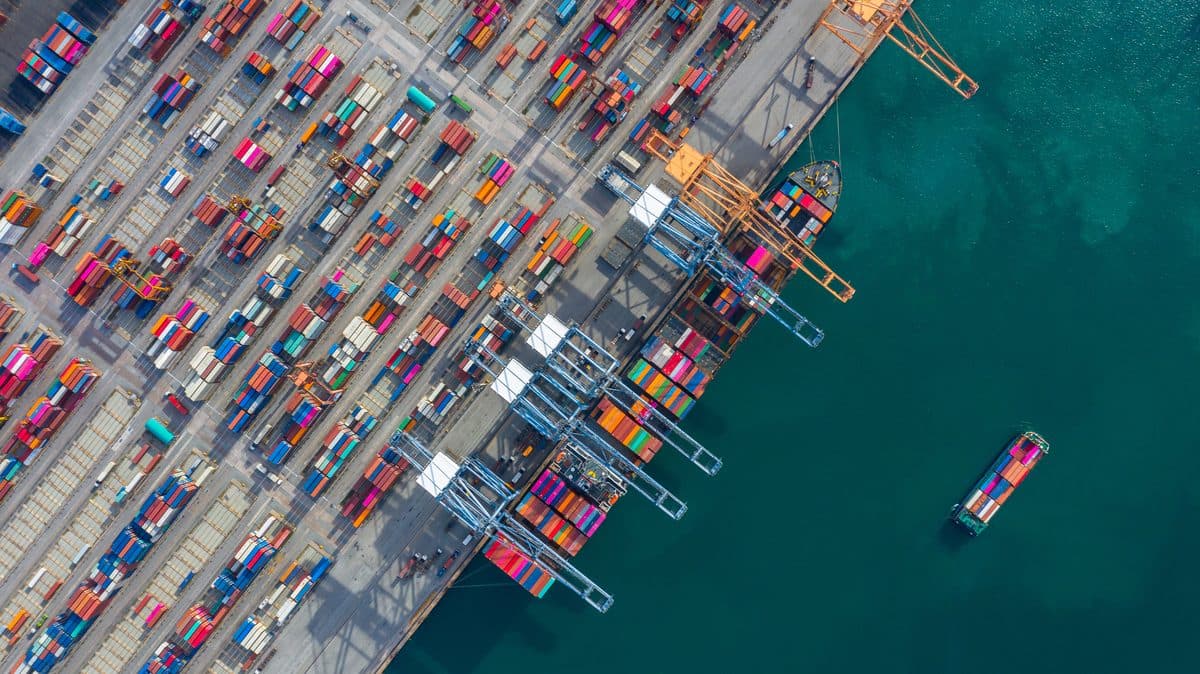
Keep terminal operations connected, visible, and moving
Maritime port operations are becoming more connected, mobile, and dependent on real-time information. Future Technologies helps ports and terminal operators close the Operational Connectivity Gap with multi-layer connectivity solutions that support terminal velocity, operational visibility, safety, equipment coordination, and resilient operations.
What operational connectivity means here
Modern terminal operations depend on reliable connectivity across equipment, workers, assets, and operational systems. The operational connectivity architecture is a governed, multi-network architecture that connects vessels, gates, rail, yards, cranes, vehicles, workers, cameras, sensors, drones, and terminal operating systems, helping operators improve throughput, container visibility, equipment coordination, safety, and operational performance.
Built for these operators
From operational problem to outcome
Industrial Automation
Crane & vehicle coordination
Outcome: Tighter equipment coordination and noticeably smoother yard flow.
Gate & yard automation
Outcome: Faster gate moves and consistently higher terminal throughput.
Container & equipment visibility
Outcome: Real-time asset location and status across the yard and gates.
Workforce Digital Enablement
Connected workers & mobile apps
Outcome: Crews and operators work connected across the terminal footprint.
Operational Monitoring and HSE
AI video for safety & security
Outcome: Improved worker safety with reduced theft, loss, and incidents.
How the operational connectivity architecture is built
Operational outcomes, not speeds and feeds
- Throughput
- Yard flow
- Container visibility
- Equipment coordination
- Safety
- Theft prevention
- Resilience
- Operational execution
Common questions
What is the operational connectivity architecture?+
A governed, multi-network architecture connecting vessels, gates, rail, yards, cranes, vehicles, workers, cameras, sensors, drones, and TOS workflows across the right combination of connectivity layers.
Why is private cellular suited to terminals?+
Terminals are large, mobile, and metal-dense. Private cellular provides deterministic, wide-area coverage for moving equipment and automation that Wi-Fi alone cannot reliably deliver across the yard.
How do you improve terminal throughput with connectivity?+
By connecting equipment, gates, and TOS workflows so moves are coordinated and visible in real time, reducing congestion and increasing throughput without adding physical capacity.
See your operational connectivity architecture run before you build it.
Bring a use case to the Living Lab. We validate the architecture on real hardware, then deliver a practical, phased modernization roadmap.