
Connecting AGVs: When Wi-Fi Isn't the Only Answer
As AGV and AMR fleets scale on the factory floor, Wi-Fi alone may not meet mobility and reliability needs, which is why private cellular belongs in the conversation.

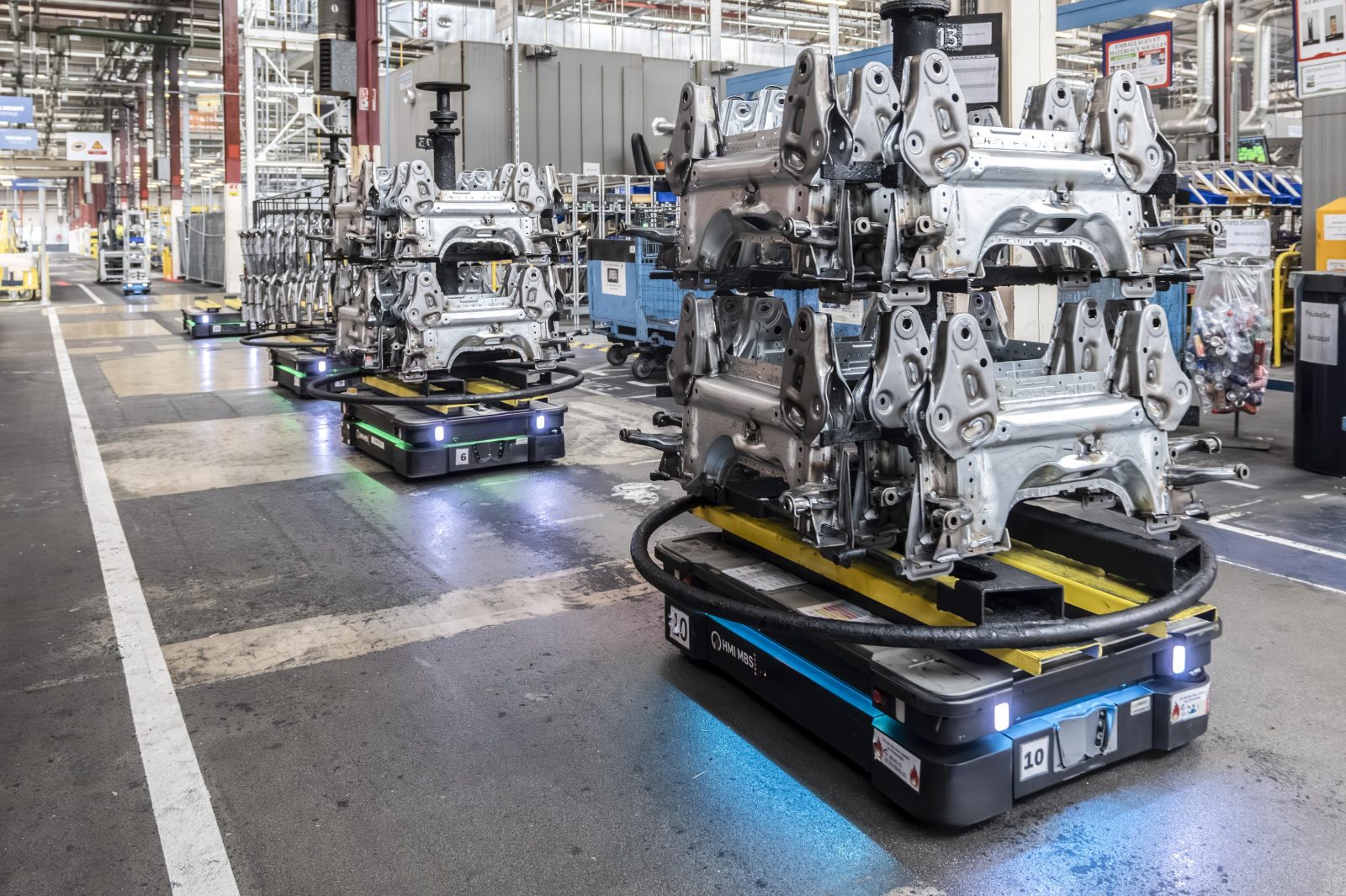
Autonomous material movement is becoming a bigger part of the factory floor. As manufacturers deploy more AGVs, AMRs and other mobile production assets, one question is becoming increasingly important: is the plant network designed for the mobility these systems require?
Wi-Fi remains an important part of manufacturing connectivity. But high-mobility applications can expose challenges with roaming, interference, device density and coverage, especially as manufacturers move from a handful of vehicles to production-scale fleets. That is why some leading manufacturers are adding private cellular to the conversation.
Private Cellular Isn't About Replacing Wi-Fi
The question shouldn't be "Wi-Fi or private cellular?" It should be "what does this application require?"
AGVs and AMRs move continuously across production areas, warehouses and transition zones. For applications where reliable mobility, predictable performance and low tolerance for connectivity interruptions are critical, private cellular can provide an enterprise-controlled wireless layer designed around those requirements. In other areas, Wi-Fi may remain exactly the right solution.
Increasingly, the answer is a multi-network factory, with each technology applied where it fits best. The goal is to start with the operational outcome and determine which connectivity layers are actually required, not start with a preferred technology.
For Automation Integrators, That's an Opportunity
If you're an industrial automation systems integrator, private cellular doesn't have to be a competing technology or a capability you need to build yourself. It can expand what you bring to the customer.
As manufacturers evaluate AMR platforms and other advanced production-logistics systems, being able to recognize where private cellular may belong in the architecture can differentiate your solution. And when it does belong, you can bring in a connectivity specialist to deliver that capability through you.
That's where Future Technologies fits. We have planned, deployed, configured and supported private cellular in an advanced automotive manufacturing environment. Our capabilities extend across the lifecycle, from RF and network design through equipment sourcing, deployment, configuration and ongoing support.
We also work across a broad private cellular ecosystem, including Ericsson, Nokia, Celona, Semtech, T-Mobile, Verizon and AT&T. That allows us to design around the application and operating environment rather than force the project into a single vendor's architecture. For the automation integrator, the model is simple: you own the automation solution, and Future Technologies brings the private cellular expertise to help you deliver it.
A New Question for Your Next AGV Project
When you're designing an AGV or AMR deployment, don't automatically assume the existing wireless network is the right answer, or that private cellular is. Ask what level of mobility, reliability, coverage and performance the operation actually requires, then design the connectivity architecture around that answer.
Start with the operational outcome, not the preferred technology, and let the requirements determine the network design.
Join Us for the Connectivity Road Show
Want to explore how private cellular fits into a broader operational connectivity architecture? Join Future Technologies, Ericsson and leading ecosystem partners on November 10 at Future Technologies' headquarters and Living Lab in Suwanee, Georgia, for the Connectivity Road Show.
Through live demonstrations, expert insights and interactive discussions, we'll explore how private and public cellular, Wireless WAN, edge technologies and security can work together to support the next generation of industrial automation and connected operations.
Frequently asked questions
No. Most manufacturers end up with a multi-network factory, using Wi-Fi where it fits and private cellular where mobility, reliability and roaming demands exceed what Wi-Fi can consistently deliver.
Start with the operational requirement, not the technology. If the application needs continuous mobility across large areas with low tolerance for connectivity interruptions, private cellular is worth evaluating alongside Wi-Fi.
Yes. Integrators can own the automation solution while partnering with a connectivity specialist like Future Technologies, which handles RF design, equipment sourcing, deployment and ongoing support across a broad vendor ecosystem.