


June 3, 2026
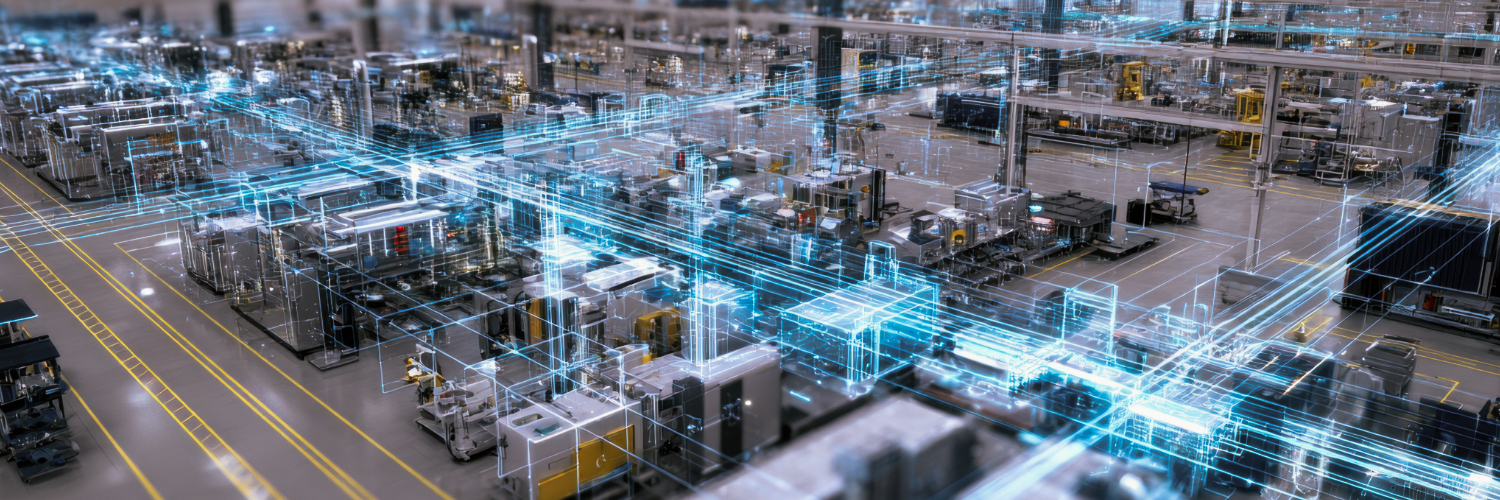
Warehouse and distribution operations are under increasing pressure to move faster, operate more efficiently, and scale with greater flexibility.
Retail fulfillment networks, third-party logistics (3PL) providers, parcel hubs, and manufacturing-integrated warehouses are investing heavily in automation, robotics, scanners, sensors, AI-enabled video, yard management systems, and real-time inventory visibility. The goal is clear: improve throughput, reduce delays, increase inventory accuracy, support labor productivity, and keep orders moving efficiently across the supply chain.
Yet many warehouse automation projects encounter the same hidden constraint:
The connectivity environment was not designed for the operational demands being placed on it.
For years, warehouse networks were typically designed around enterprise access, handheld scanning, office connectivity, and localized wireless coverage. That model worked when workflows were more static, device counts were lower, and operational systems generated far less data.
Modern warehouse operations are fundamentally different.
AMRs, AGVs, autonomous forklifts, robotic picking systems, mobile scanners, tablets, wearables, vehicle-mounted systems, cameras, sensors, dock systems, yard assets, and edge computing platforms all require reliable connectivity across dynamic operational environments.
And they do not simply need coverage.
They need consistent performance across warehouse floors, loading docks, staging areas, yards, temporary operational zones, and transition points between indoor and outdoor environments.
That is where automation projects often begin to strain legacy network architectures.
A robot that loses connectivity in a high-traffic area can slow material flow. A handheld scanner that drops signal can create delays in picking and packing operations. A yard management system without reliable connectivity can limit trailer visibility. A video analytics platform can overwhelm a network that was never designed to support high-volume operational data. Even a temporary overflow area may require connectivity before permanent infrastructure can be deployed.
When these issues occur, automation technology is often blamed.
But the real issue may be the connectivity architecture supporting it.
Automation Changes the Network Requirement
Warehouse automation introduces an entirely new set of connectivity requirements.
Organizations must support significantly more mobile devices, real-time operational data, indoor-outdoor movement, edge computing workloads, video and sensor traffic, uptime requirements, and operational resiliency than traditional warehouse networks were designed to handle.
This creates what Future Technologies calls the AI Connectivity Gap: operational systems and connected devices are advancing faster than the network architecture required to support them.
In warehouse and distribution environments, this gap often appears as unreliable AMR or AGV performance, scanner dead zones, inconsistent yard connectivity, delayed inventory updates, limited visibility across dock and staging areas, difficulty supporting peak-season operations, or automation pilots that perform well in one area but struggle to scale across the facility.
This is not simply a Wi-Fi problem.
And it is not solved by selecting a single new network technology.
Warehouse Connectivity Requires More Than One Network
The most resilient warehouse and distribution environments are increasingly built on multi-layer connectivity architectures.
Wi-Fi continues to support many localized workflows, enterprise devices, and traditional warehouse applications. Private cellular networks may be better suited for broad mobility, AMRs, AGVs, connected forklifts, yard operations, and deterministic coverage across large or complex facilities. Cellular Wireless WAN solutions can support temporary sites, overflow locations, fleet connectivity, distributed facilities, and backup communications.
At the same time, scanners, cameras, RFID, BLE, UWB systems, vehicle-mounted devices, sensors, and edge platforms create new streams of operational data that must be connected, secured, monitored, and managed.
Rapid-deployment networks may also be required to support peak-season operations, pop-up logistics environments, temporary staging zones, construction projects, or incident response activities.
Underlying site infrastructure—including cabinets, power systems, cabling, fiber, mounting structures, environmental controls, and yard infrastructure—often determines whether connectivity can be deployed reliably in real-world operational environments.
The question is not:
"Which wireless technology should we buy?"
The better question is:
"What operational outcome are we trying to enable, and what connectivity architecture is required to support it?"
The Outcomes That Matter Most
When connectivity is designed around warehouse and distribution outcomes, automation initiatives are more likely to deliver measurable business value.
|
Outcome |
What It Enables |
|
Warehouse Automation & Robotics |
Reliable connectivity for AMRs, AGVs, autonomous forklifts, robotic picking systems, conveyor automation, and automated storage/retrieval systems operating across dynamic warehouse environments. |
|
Inventory Visibility & Accuracy |
Real-time inventory tracking through scanners, sensors, RFID, machine vision, handheld devices, and connected warehouse systems. |
|
Operational Mobility |
Seamless connectivity for mobile workers, handhelds, tablets, voice systems, wearables, and vehicle-mounted systems across floors, yards, docks, and distribution campuses. |
|
Yard & Fleet Operations |
Extended visibility and connectivity across trailers, yard tractors, fleet vehicles, gate systems, and outdoor logistics operations. |
|
Resilience & Business Continuity |
Reduced operational disruption through multi-layer architectures that support continuity during outages, peak periods, or infrastructure constraints. |
From Automation Pilot to Operational Scale
Many warehouse automation projects succeed during controlled pilot programs because the environment is limited.
Scaling is significantly more challenging.
The network must support more devices, more movement, more operational zones, more workflows, more users, and greater operational dependency than ever before.
That requires designing connectivity around mobility patterns, facility layout, yard and dock operations, device density, edge workloads, application criticality, redundancy requirements, and peak-period demand.
Future Technologies helps organizations define the connectivity architecture required to support automation, mobility, operational visibility, and resilience across real-world warehouse and distribution environments.
That is what connectivity transformation means.
It is not simply refreshing the network.
It is aligning the right connectivity layers, devices, infrastructure, and support model to the operational outcomes the business needs to achieve.
See It in Action
For qualified warehouse, distribution, and manufacturing leaders, Future Technologies is hosting a live Living Lab event in Milwaukee this July with limited seating available. This is a unique opportunity for in-depth conversation with Future Technologies CTO Gary Hill, former CTO of Georgia-Pacific, and to see how modern connectivity architectures can support automation, mobility, edge intelligence, and operational resilience.
For teams not attending in person, Future Technologies also offers a Living Lab Virtual Tour to explore what modern operational connectivity could enable in your environment.
Critical Connectivity. Built Right.
Join us July 20th in Milwaukee for a Connectivity Workshop + Brewers Game
Reserve Your Spot
Ready to take the next step in your connectivity transformation journey?
Contact Us